JAGUAR’S MAKE-OR-BREAK ELECTRIC GT IS ABOUT TO GET ITS REAL NAME
Jaguar’s New EV Is More Than a New Model
Jaguar is not simply preparing to name another electric car.
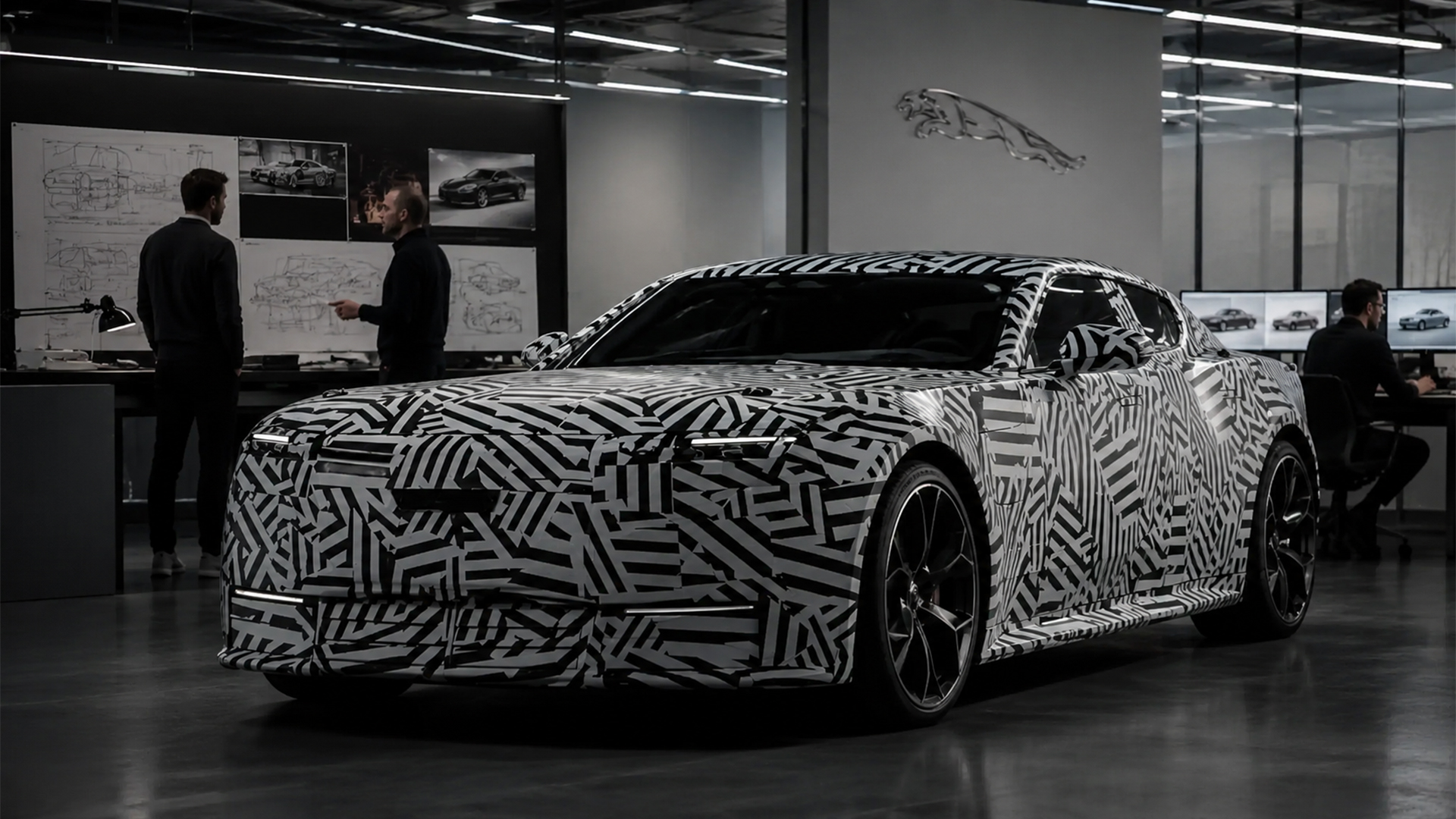
It is preparing to name the vehicle that may define whether its entire reinvention works. The British brand will reveal the production name of its new electric grand tourer on May 12, ahead of a full production-car debut planned for September. The model is expected to be a four-door production version inspired by the dramatic Type 00 concept, which introduced Jaguar’s new design language and its move toward a higher-end electric future.
That makes the name unusually important. Jaguar has already shown the world the controversy. Now it has to show the car can become a serious luxury product.
The Type 00 Was Designed to Shock
The Type 00 concept did exactly what Jaguar wanted in one sense: it got attention.
Revealed as part of the brand’s new-era identity, the concept abandoned the familiar Jaguar look for something far more minimalist, long, low, and architectural. It had a long bonnet, exaggerated proportions, a two-door coupe shape, and a design language meant to signal a clean break from the company’s recent past. Jaguar’s own Type 00 page describes it as a non-production vehicle and frames it around the brand’s “Copy Nothing” direction.
The reaction was divided.
Some saw the concept as brave, fresh, and necessary for a company that had struggled to stand out. Others saw it as too detached from Jaguar’s traditional identity. That split reaction is exactly why the production car’s name matters. It will be the first chance for Jaguar to turn a polarizing concept into a real showroom product with a clear identity.
The Production Car Will Be a Four-Door GT
The production vehicle is expected to differ from the Type 00 concept in one major way.
While the concept was a two-door coupe, the road-going model will be a four-door grand tourer. Reports indicate that the car will keep much of the Type 00’s overall proportion and design attitude, but adapt it into a more usable body style.
That choice makes sense.
A four-door GT gives Jaguar more room to compete in the high-end luxury market while avoiding a direct sports-car fight. It also lets the brand offer something more emotional than a conventional SUV, without limiting the car to the tiny market for large two-door coupes.
This is where Jaguar’s strategy becomes clearer. The company is not trying to replace the XE, XF, F-Type, or F-Pace with direct successors. It is trying to reset the brand around fewer, more expensive, more dramatic electric models.
Jaguar Is Moving Upmarket
The new EV is part of a much bigger shift.
Jaguar is moving away from competing directly with German and Japanese premium brands and instead wants to position itself closer to Bentley, Porsche, and Aston Martin. Motor1 reports that the new grand tourer will be central to that repositioning, arriving after Jaguar ended production of its combustion-powered lineup at the end of 2025.
That is a risky move, but it is understandable.
Jaguar spent years struggling to compete in crowded premium segments. Sedans became harder to sell. SUVs helped, but not enough to give the brand a clear global advantage. Electrification gives Jaguar a chance to start again, but only if the product feels special enough to justify the move upmarket.
A bold design is one part of that. A convincing name, price, range, performance, and ownership experience are the rest.
The Numbers Aim High
The technical targets suggest Jaguar wants the new GT to be taken seriously.
The car is expected to use Jaguar Electric Architecture, a dedicated EV platform. Reports say the production model will use a triple-motor setup producing more than 1,000 horsepower and 1,300Nm of torque, with a WLTP range target of around 700km and the ability to add roughly 321km of range in 15 minutes under suitable charging conditions.
Motor1 also reports that the EV will feature air suspension and more than 400 miles of range on the WLTP cycle.
Those figures place the car firmly in high-performance luxury EV territory. They also show why Jaguar cannot afford to make this feel like a regular electric sedan with a dramatic body. At this price and positioning, buyers will expect speed, range, comfort, design, software polish, and genuine luxury presence.
The Name Has to Carry a Rebrand
Car names are often treated as a marketing detail. For Jaguar, this one carries more weight.
The Type 00 name was useful for a concept, but it was never likely to be the final production name. The production car needs a badge that can survive outside the show-car environment and make sense to wealthy buyers who may be cross-shopping Porsche, Bentley, Aston Martin, Mercedes-AMG, or high-end EV newcomers.
A good name could help give the car identity. A weak one could become another distraction.
That matters because Jaguar’s rebrand has already generated debate. The first production EV needs to calm the conversation by feeling coherent: name, design, performance, luxury positioning, and brand message all need to point in the same direction.
The Controversy May Have Helped, But Only Briefly
Jaguar’s new direction has drawn heavy online attention since the Type 00 and rebrand were revealed.
That attention is valuable, but only in the short term. A controversial concept can make people talk. A production car has to make people buy.
The danger for Jaguar is that the discussion stays stuck on branding and design instead of moving toward product strength. The May 12 name reveal is therefore a small but important step in changing the subject. Once the car has a real name, Jaguar can begin presenting it less as a concept-era symbol and more as a serious vehicle.
The September reveal will matter even more. That is when buyers and critics will judge whether the design translates into a believable production GT.
Jaguar Is Taking a High-Risk Route
The strategy is bold because Jaguar has left itself little room for half-measures.
Ending combustion production and moving into a higher-priced electric future means the new GT cannot simply be good. It has to be convincing enough to rebuild confidence in the brand. It has to appeal to existing Jaguar loyalists while also reaching buyers who may not have considered Jaguar in years.
That is difficult because the luxury EV market is becoming more competitive. Porsche has the Taycan. Bentley is preparing its own electric future. Mercedes, BMW, Audi, Lucid, and Chinese luxury EV brands are all fighting for attention. Jaguar’s advantage cannot be volume. It has to be character.
The Type 00 showed character. The production car now has to show discipline.
The First Name of Jaguar’s New Era
The production name reveal may sound like a minor event, but for Jaguar it is the first real branding test of the new era.
The concept has already done its job by making people look. The next step is harder: turning that attention into desire, and turning desire into orders. A name will not decide everything, but it will shape how the car is understood from the beginning.
Jaguar is betting that it can stop being a struggling premium brand and become a smaller, more exclusive electric luxury marque.
That bet starts with one car.
And very soon, that car will finally have a name.
2026-05-10T06:41:42Z